Professional CPD Workshops
Early years settings work within the EYFS Statutory Framework. Schools educating older children work within wider curriculum frameworks, the SEND Code of Practice, and Ofsted inspection guidance. Across all of these, the requirement to ensure resources are safe is clear — but the framework for how to actually assess play materials is not. Most settings have a general health and safety process, but very few have an approach specifically for toys and play materials: one that accounts for where a resource came from, the specific children who will use it, and how to make those decisions consistently, regardless of which member of staff is in the room.
The result is a set of familiar problems. Staff hesitate before accepting donated items, or accept them without any assessment process. Add SEND and sensory differences into the mix and the situation gets very complex indeed.
With so little specific guidance in this area, decision-making can feel like guesswork. But the duty of care does not disappear because the guidance is thin. These are not failures of attention. They are the consequence of a knowledge gap that the sector has not been asked to fill... and that can leave staff and leaders exposed

How I help schools and organisations
Rather than a set of rules, this training gives professionals a repeatable framework and skills for making contextual decisions about play materials. Within it, we consider the child, the item, the environment, and the supervision available. Professionals leave with an approach they can apply from the following day, not just some policy to file away.

Your staff will learn:
Assess any play material systematically, including donated, secondhand, and online marketplace resources
Understand what CE and UKCA marking does and does not guarantee (and why recalls regularly involve marked products)
Identify the specific safety questions that standard guidance does not answer for children with SEND, sensory differences, or complex needs
Make and document risk decisions that hold up to scrutiny from parents, colleagues, or inspectors
Know when to accept, adapt, or decline a resource, and how to explain that decision clearly
This training works particularly well for early years settings and special education environments.

Training options
90-minute session (£280)
An introduction to the contextual assessment framework: the key questions staff should ask about any play material, how to read safety marking accurately, and how to handle donated and online marketplace resources. Suitable for twilight CPD or a staff meetingHalf-day training (£495)
The full assessment framework with hands-on practice. Staff work through toy examples using the industry-standard testing tools provided, apply the framework to scenarios relevant to your setting, and leave with documented decision-making processes they can use immediately.Full-day training (£875)
Everything in the half-day, plus a guided audit of a chosen space within your setting. Working through your actual resources, environment, and SEND considerations together, so the framework is applied to your reality. The right choice when you want a meaningful shift across your whole team.
*Payment of the deposit is required to confirm delivery dates, and the full amount up to 5 working days after the delivery. More information is available in the Terms and Conditions.
*All sessions delivered more than 20 miles from Liverpool include additional travel costs of 45p per mile.
Each participant gets:
A certificate of completion
Digital or printed resource pack
Each organisation gets:
Industry standard testing tools for small objects and finger entrapment
Ongoing email support for a whole year after your training date
Additional Support Available
Beyond the core training, I also offer:
Leadership consultancy on play safety policies and protocols
Family workshops to improve your home-school engagement
Please ask if you wish to have some other support to complement the training. I am happy to build a bespoke offer to save you time and money on booking several different training options.
About Your Trainer

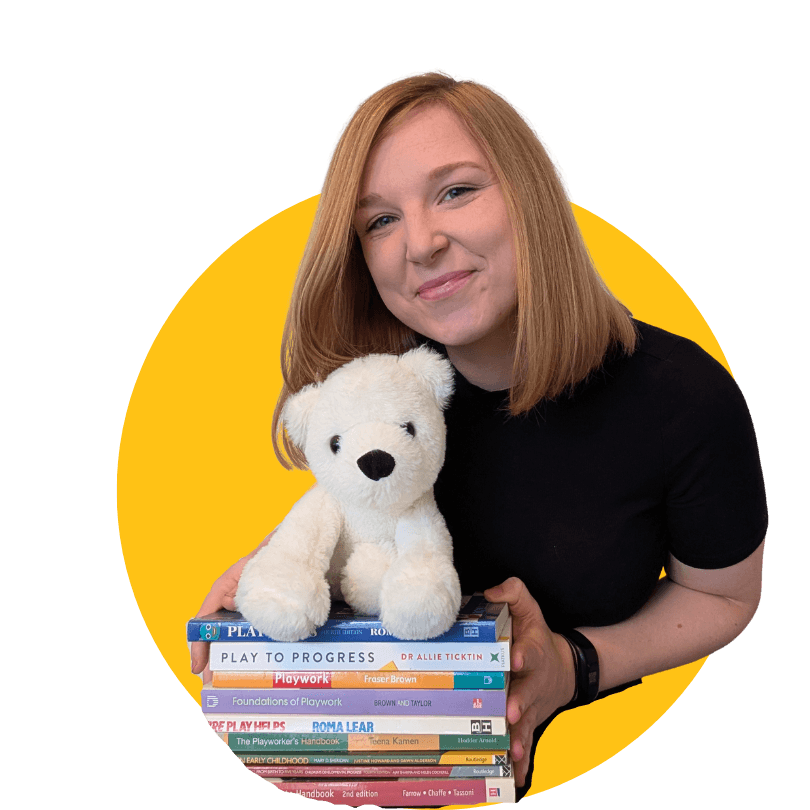
My name is Sara and I am proud to bring a unique blend of academic excellence and practical expertise to ToyScope's educational training programmes. With a PhD in Education focused on neurodiversity in classrooms and a Master's Degree in Educational Treatment of Diversity, my academic foundation is complemented by specialised certifications in Parent-Child Attachment Play and comprehensive Toy Safety Regulation training.
My work in this area has been recognised beyond training: I have completed a government-funded nationwide project in this field and have published in the Impact journal, the Chartered College of Teaching’s practitioner publication for teachers and school leaders. When I work with your team, I am drawing on research that has been scrutinised, not just experience that sounds good on a course description..
Book Your Training
For availability and bookings, please get in touch with me at least 14 days in advance of your preferred date:
Profile: LinkedIn
Email: info@toyscope.org
Website: www.toyscope.org
I typically book full-day sessions 4-8 weeks in advance and 2-4 weeks for shorter sessions.
NAME*
EMAIL*
MESSAGE*
Toy safety is a dynamic process, rather than a single rule. Each child, family, space, toy and situation is different, so I am not teaching rules, but skills for making safety decisions in a moment. ToyScope is a passion project. Nothing on this site is for sale. Everything here is free to use, copy and adapt, including in school and workplace training. Please don't resell it.